Pubblicato il 08/06/2016 10:24:55
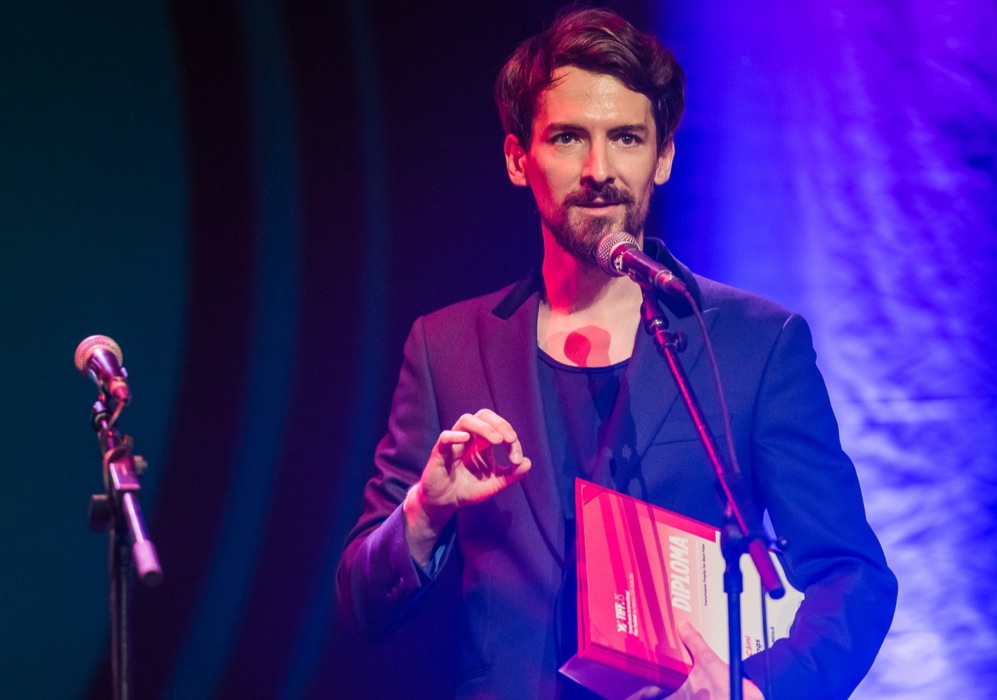
TIFF - Transilvania Film Festival 2016.
Si è da poco concluso il Transilvania IFF 2016 con un numero di film che fanno onore alla cinematografia europea ma dei quali forse non avremo modo di vederli sui nostri schermi italiani, se non affidandoci ai trailer che Cineuropa mette a disposizione sul suo sito, insieme alle informazioni del caso e le news che solitamente ci invia, e per le quali gli siamo infinitamente grati. Vorremmo fare di più, essere più presenti , ma… sta di fatto che nessun film è presente nella lista dei candidati a questo pur importante Film Festival, perché. Comunque, qui sotto, ho elencati solo alcuni dei film che gradiremmo vedere sui nostri schermi, basandomi sull tematiche che essi trattano e per il rigore di alcuni film-maker che ci piacciono in modo particolare, perché hanno dimostrato e tutt’ora dimostrano di ‘avere delle idee nuove’ da portare sugli schermi, e non solo per gli argomenti trattati ma per come detti argomenti si presentano nel nostro quotidiano post-moderno. (Gio.Ma)
TIFF: The 15th edition of the Transilvania International Film Festival ended yesterday after a special screening of Belgica. On Saturday, Bogdan Mirică’s Dogs, winner of the FIPRESCI award in the Un Certain Regard section at Cannes, was announced as the recipient of the festival’s top award, the Transilvania Trophy. It is the fourth time in the festival’s history that a Romanian film has won the Trophy, the previous winners being Corneliu Porumboiu’s Police, Adjective (2009), 12:08 East of Bucharest (2005), and Cristian Mungiu’s Occident (2002).
Here is the complete list of the winners of the Transilvania IFF 2016:
Transilvania Trophy
Dogs - Bogdan Mirică
Best Director
Avishai Sivan – Tikkun
Special Jury Prize
Sparrows - Rúnar Rúnarsson
Best Performance
David D’Ingeo - Where There Is Shade
Special Mention of the Jury
Monika Naydenova, Alexander Benev – Thirst
FIPRESCI Award (#Animal Section)
Neon Bull - Gabriel Mascaro
Audience Award
The Open Door - Marina Seresesky
Romanian Days Award for Best Feature
The Last Day - Gabriel Achim
Romanian Days Award for Best First Feature
Discordia - Ion Indolean
Romanian Days Award for Best Short Film
A Night in Tokoriki - Roxana Stroe
Special Mention of the Jury
My Name Is Costin - Radu Potcoavă
Surprisingly, Dogs was completely ignored by the Romanian Days Jury, where it lost out on the Best Feature Award to Gabriel Achim’s The Last Day and on the Best First Feature Award to Ion Indolean’s Discordia.
‘Dogs: a dangerous legacy’ by Bogdan Mirica wins the top award at Transilvania IFF.
by Stefan Dobroiu per Cineuropa News.
Synopsis:
Roman, a young man from Bucharest, comes to the countryside near the border with Ukraine with the firm intention to sell the vast but desolate land he inherited from his grandfather. He is warned by old man Hogas, the local cop, that his grandfather was a local crime lord and his “boys”, led by the charismatic and cruel Samir, will not let go of the land - and their smuggling business - without a fight. Roman doesn’t give up and the three men clash in a triangle of violence.
‘DOGS’ by Fabien Lemercier per Cineuropa News.
15/05/2016 - CANNES 2016: With this highly accomplished blend of film noir and modern western, Bogdan Mirica makes the transition to the feature-length format with flying colours. Already screened in the ‘Un Certain Regard’ section at the 2016 Cannes Film Festival.
Over the last 15 years or so, we've become used to Romanian cinema regularly unveiling new auteurs who, more often than not, work in the realms of social realism. With Bogdan Mirica and his feature debut, Dogs [+], revealed in the Un Certain Regard selection of the 69th Cannes Film Festival, a new, talented face has just signed up to this trend, following in the footsteps of his elders (Mungiu, Puiu, Jude and Netzer, to name just a few). But more than anything else, it's the fact that he has opened up to a different style that really makes its mark here. Toying skilfully with the codes of film noir (set against a backdrop of an enigmatic reinterpretation of classic western figures), slowing the pace and capitalising on the power of suggestion provided by the natural settings, the young filmmaker has crafted a charming atmosphere into which he has inserted a rather mainstream plot, without ever abandoning stylish, high-quality cinematic standards when it comes to the mise-en-scène and a sleek visual sheen. This very promising approach, which is “arty” without taking it to extremes, and mainstream without the inherent luridness, probably explains why all of the Cannes selections had to battle it out to coax the movie into their own showcase.
"You're not made for this place." This is what Roman (Dragos Bucur) is told in no uncertain terms when he arrives from the capital city after having inherited a 550-hectare property from his late grandfather. We're in the middle of nowhere, the open countryside stretching as far as the eye can see, and the young man soon starts asking himself some questions. Where did his grandfather get the money to buy the plot in just nine months at the time, back in 1983? Why did the communists then leave him be? And above all, why did he settle down there, a place where there's no forest, no water and where nothing can grow? Another oddity is the fact that this extremely remote house is exposed to the full force of the wind, but is surrounded by a fence bristling with barbed wire. Once night falls, the plot thickens with the backing of the guard dog ("She only bites when she's angry") and a curious procession of cars nearby, before his friend in charge of putting the property up for sale simply vanishes ("It's as if the ground has swallowed him up"). All of this serves to crank up Roman's concern a notch, and yet he has no intention of giving in to intimidation... And meanwhile, the elderly head of the microscopic local police force (Gheorghe Visu) calmly conducts an investigation after a foot is discovered in a pond...
A laconic young hero, a sheriff on his last legs, a villain (Vlad Ivanov) who is particularly menacing under that wily exterior, rifles and hammers at everyone's fingertips, minimalistic conversations imbued with the unspoken, the deepest darkness and peacefulness of the countryside shattered by sudden flashes of light, and vast panoramas a stone's throw from the border and from the Danube: Mirica (who wrote the screenplay for this film being sold abroad by Bac Films) unspools his story patiently, slowing the pace, avoiding explanations and postponing the score-settling – and all of this enables the stirring under the surface of this vast space governed by its own rules, where "there are animals both large and small", to seep through more effectively. Add a dash of dark humour, a touch of the fabular teetering on the fine line between good and evil, and the extremely well-crafted cinematography of Andrei Butica, and you have a feature debut with a vaguely "Tarantino-esque" whiff (albeit less over the top and more Romanian), which immediately demonstrates all of the cinematic potential of its director, even if his personality still remains somewhat hidden behind this accomplished demonstration of his dazzling skills as a filmmaker. An enigma that will make the next episode in his career all the more fascinating.
international title: Dogs
original title: Caini
country: Romania, France, Bulgaria
sales agent: Bac Films
year: 2016
genre: fiction
directed by: Bogdan Mirica
screenplay: Bogdan Mirica
cast: Dragos Bucur, Vlad Ivanov, Gheorghe Visu, Costel Cascaval
cinematography by: Andrei Butică
film editing: Roxana Szel
producer: Marcela Ursu
co-producer: Elie Meirovitz, Katya Trichkova, Stephan Komandarev
production: 42 Km Film, EZ Films, Argo Film Ltd.
distributor: Bac Films
‘The Last Day’ by Gabriel Achim
Synopsis:
The Last Day centres on a special journey undertaken by four men from a provincial town. The mayor, the policeman and the leader of the Christian youth association accompany their friend Adrian on his trip to a monastery, where he has decided to start a new life as a monk. The mayor, an amateur filmmaker, offers to film the group's journey to the monastery, but he also has some secret plans for Adrian.
See also: Watch our interview with Romania's Gabriel Achim, who triumphed in the Romanian Days section of the Transilvania IFF with his film The Last Day.
international title: The Last Day
original title: The Last Day
country: Romania, France
year: 2016
genre: fiction
directed by: Gabriel Achim
screenplay: Gabriel Achim, Cosmin Manolache
cast: Doru Ana, Adrian Văncică, Adrian Ciglenean, Mimi Brănescu
cinematography by: George Chiper-Lillemark
producer: Gabriel Achim, Daniel Burlac
production: Green Film
‘Tikkun: The nature of faith and desire’ by Samuel Antichi
TIFF News by Cineuropa News.
17/11/2015 - Avishai Sivan's minimalist and enigmatic tale follows a Yeshiva student in Jerusalem struggling with the strict orthodoxy rites that have ruled his life.
A young Orthodox student, Haim Aaron (Aharon Traitel), the eldest child of a kosher butcher (Khalifa Natour) and his wife (Riki Blich), lives in Jerusalem, and his talents and devotion are the envy of the entire Hasidic Jewish community, a branch of Judaism that promotes mysticism as the fundamental aspect of the faith. One evening, he collapses in the shower in the family apartment while he is contemplating masturbation, and a head injury makes him lose consciousness. After 40 minutes attempting to revive him, he is declared dead by the paramedics until his father intervenes, insisting on continuing CPR, and Haim Aaron miraculously comes back to life. However, after this apparent return from death, he is altered physically as well as spiritually. His behaviour becomes more eccentric, inasmuch as he remains apathetic to his Yeshiva studies, for which he force-fed his brain while starving his body, continually falling asleep during class. Furthermore, he announces at home that he has renounced eating meat, which is a particular affront to his father's job, and he starts to experience an unpredictable bodily awakening, exploring his sexual desires. Unable to rest at night, he secretly wanders the streets by hitching rides with strangers. After noticing Haim Aaron's change in behaviour, the father is tormented by the fear of having acted against God’s will by resuscitating his son.
Avishai Sivan's Tikkun won the Best Feature Film Award at the Jerusalem Film Festival and the Special Jury Prize at the Locarno International Film Festival. Consequently, this bizarre coming-of-age story within an ultraorthodox Jewish community has attracted intense interest from other festivals such as the Stockholm International Film Festival, where it is screening in the main competition section.
Shot with a strikingly sublime and sensitive high-contrast black-and-white aesthetic, this minimalist allegorical mystery about the capriciousness of the Old Testament explores the intimacy of men and their souls through a crisis of faith. The mysterious narrative elevates our vision to the search for spirituality where religion, self and sexual desire intersect. Its formal construction and the calm gaze of the fixed camera shots with little or no dialogue magnify the grey areas (both morally and logistically speaking) in which a formidable father, because of a spontaneous act of love for his son, may have destroyed the natural order of his world. This powerful depiction of a journey from devotion to doubt gives rise to a climactic series of surreal events amid a heavy nocturnal fog, where the will of God is concealed. A cinematic and philosophical examination of a nightmare that delves into the very nature of faith and explores the core of existence itself.
‘Death by Death’, psycho-somatisation elevated to an art form.
by Aurore Engelen per Cineuropa News.
14/10/2015 - With his first feature film, Xavier Seron shamelessly takes on a tenderly indecent tragicomic world.
Michel Peneud is going to die. Just like you and me and his mother, except that his mother has been told she is going to die by her doctor. So she has decided to live. And for Michel’s mother, living means feeding her cats, drinking sparkling wine like it’s champagne, and loving Michel. But Michel sometimes finds her love a bit cumbersome. To the extent that he suddenly seems to develop symptoms very similar to those of his mother. What if Michel also has breast cancer? All by himself, Michel is a pretty picture of neuroses: hypochondria, hysteria, phobias, obsession. But what is even more unbelievable is the way that Michel Peneud raises psycho-somatisation to an art form, a unique art between martial arts (like in the ransacking of the apartment sequence) and iconography (like in the final shot, a child’s hallucinatory reinterpretation of the Virgin).
Death by Death is as excessive as its black and white shades are contrasting. But it is precisely this excess that make it exciting, this self-assured way of trying, even if it leads to failure. With this, his debut atypical feature film screened at the Festival International du Film Francophone (FIFF) in Namur, Xavier Seron goes all out: plays on words, schoolboy humour, embarrassing dizzy spells, scathing caricatures, and above all, an intimate relationship that flirts with the trivial. Seron relies on what is most intimate to us: life (notably the mother-son relationship) and death. And this dissection of the private lives of his characters takes a particularly emphatic aesthetic form. First of all is the striking black and white images, and Olivier Boonjing’s photography, with often-magnificent sequences of shots, especially in the choreographed scenes interspersed throughout the film (the household appliance shop, the yoga class, and the scene with the seesaw). These scenes are counterpoints that come one after the other, tender and farcical, and counterbalance a certain sense of deadly aftershock, the upsetting situation. The tragicomic use of Bach’s preludes or Italian song (the incredible Puoi Farmi Piangere, a cover of I Put a Spell on You) punctuate the plot, while a host of cheerful cameo actors bring a bit of levity when the story takes a darker turn, like Catherine Salée, who shows us around her retirement home.
True, Xavier Seron doesn’t leave much to his main actors, but he seems to film them with the benevolence of someone who shares their doubts and neuroses. Death by Death is a real blank canvas for the gentle madness of Jean-Jacques Rausin, the big tragicomic hero, a trashy sort of Michel Blanc. Myriam Boyer, on the other hand, bravely shoulders the difficult role of the downtrodden mother, who’s so sick and crazy that it could kill her, but full of humanity.
If Xavier Seron took several years to finish Death by Death, a film that was challenging to edit, he leaves us with the impression that he made the film he wanted, which is not at all obvious. The film was produced in Belgium by Novak Prod, and in France by Tobina Film, who has already worked on other atypical Belgian films (Amer [+] and The Strange Colour of Your Body’s Tears [+] by Cattet and Forzani). Death by Death received financial support from the CCA, the CNC and the Brittany region.
‘Death by Death’ by Xavier Seron per Cineuropa News.
Synopsis:
Michel Peneud is going to die. Just like you and me and his mother, except that his mother has been told she is going to die by her doctor. So she has decided to live. And for Michel’s mother, living means feeding her cats, drinking sparkling wine like it’s champagne, and loving Michel. But Michel sometimes finds her love a bit cumbersome. To the extent that he suddenly seems to develop symptoms very similar to those of his mother. What if Michel also has breast cancer? All by himself, Michel is a pretty picture of neuroses: hypochondria, hysteria, phobias, obsession.
international title: Death By Death
original title: Je me tue à le dire
country: Belgium, France
sales agent: Stray Dogs
year: 2015
genre: fiction
directed by: Xavier Seron
release date: BE 4/05/2016
screenplay: Xavier Seron
cast: Jean-Jacques Rausin, Myriam Boyer, Serge Riaboukine, Fanny Touron, Franc Bruneau
cinematography by: Olivier Boonjing
film editing: Julie Naas
art director: Erwan Le Floc'h
costumes designer: Laure Mahéo
producer: Olivier Dubois, François Cognard
production: Tobina Film, Novak Production
distributor: Happiness Distribution
‘Remainder: Reconstructing memory’ by Martin Kudláč
TIFF News by Cineuropa News.
03/06/2016 - Video artist Omer Fast has adapted Tom McCarthy’s reality-bending thriller, and the result is screening in competition at the TIFF
For his first feature-length directorial and narrative outing, Israeli video artist Omer Fast has tackled a novel by British artist and writer Tom McCarthy, Remainder [+], and the result is screening in competition at the Transilvania International Film Festival. Although the novel initially came out in a batch of 750 copies via a French publisher as a kind of art project, it was later picked up for a wider release. McCarthy himself describes the story as “the hero builds a film set, but there is no film”, thus confirming that the material possesses a certain cinematic quality. In his works, Fast investigates the recurrent topics of the psychology of trauma, the relationship between memory and reconstruction, and the link between reality and non-reality – an array of themes in sync with the novel’s motifs.
The director kick-starts the narration through a dramatic, freak Donnie Darko-like accident that leads to the victim, Tom (Tom Sturridge), being offered an £8.5 million reparations settlement if he agrees never to discuss the incident. Tom accepts; however, the aftermath not only leaves its mark on his body (a lost limb and scars are a testament to what he shall never discuss), but also damages his mental wellbeing as a result of the severe trauma. He awakes from his coma in a different reality that he does not remember, and thus clings with a rigor mortis-like grasp to a series of obscure memories that he is determined to re-enact right down to the smallest detail. This curious hobby turns into an obsession, and as an eccentric millionaire, Tom makes the transition from cardboard cut-outs to meticulous reconstructions, sealing himself in a cocoon of a conscientiously fabricated alternative reality.
The filmmaker builds up the structure of Remainder in the vein of puzzle movies, although less mysterious and more clinical, as the protagonist yearns for bigger and more realistic sets, akin to the events that unfold in Charlie Kaufman’s Synecdoche, New York, in an endless loop where the same event repeats over and over again. With his more detailed creations, Tom finds accidental flaws in the efficiently staged déjà-vu manifestations of reality (after all, a crack in a wall triggered this whole merry-go-round of manic repetition). Fast’s psychonautic dive into a deranged mind props up an intertwining parallel plotline of a paranoid heist thriller, in which the protagonist may or may not play a role. The filmmaker thus explores not only the themes of reality and non-reality, and trauma and memory, but also the conventions of video art and genre film in one functional and homogenous oeuvre, knitting together both approaches to synergetic effect.
Compared to Synecdoche, New York, the production design is less opulent, a decision clearly reflecting the protagonist’s retreat from outside reality, but not skimping on the complexity of the topics and motifs that Fast dissects. A monochromatic touch lends the imagery an aseptic quality, in line with the status of the protagonist’s sanitised memory and artificially (re)constructed reality – a fiction into which Tom free-falls uncontrollably.
Remainder was co-produced by the United Kingdom (Tigerlily Films) and Germany (Amusement Park Films). The film has a sales agent, The Match Factory, with Soda Pictures distributing the movie in the UK from 24 June.
Synopsis:
Based on the bestselling cult novel by Tom McCarthy, the plot follows a young man who tries to reconstruct his past out of fragmented memories. His obsessive efforts are funded by a large financial settlement for an accident he cannot remember, but neither his friends nor he can anticipate the extremes he will go to in realising his quest.
international title: Remainder
original title: Remainder
country: United Kingdom, Germany
sales agent: The Match Factory
year: 2015
genre: fiction
directed by: Omer Fast
film run: 97'
screenplay: Omer Fast
cast: Tom Sturridge, Ed Speleers, Cush Jumbo
cinematography by: Lukas Strebel
film editing: Andrew Bird
art director: Adrian Smith
costumes designer: Sam Perry
producer: Natasha Dack, Malte Grunert
production: Tigerlily Films, Amusement Park Films
distributor: Soda Pictures
‘Chevalier’, a tragicomic portrait of the contemporary male.
by Muriel Del Don per Cineuropa News.
13/08/2015 - LOCARNO 2015: The latest film of Athina Rachel Tsangari, screened in the International Competition at Locarno, is an unforgiving journey into the mind of modern man
Chevalier [+], the latest poignant and exhilarating feature film of Greek director Athina Rachel Tsangaris, which was screened in the International Competition of the 68th Locarno Film Festival, ventures into the complex and at times absurd male universe. After The Capsule, a film with an exclusively female cast, Tsangaris decides to explore ‘the other side’ and the relationships (of power) that exist between men, a world of domination in which appearances are everything. Despite the secrets and (hidden) anxieties that inhabit the personal realities of our Greek heroes, their ‘public’ life appears unblemished and socially perfect. An unsettling and thorny masculinity pervades the latest feature film of our Greek director, who tackles the fears and weaknesses of contemporary society with bravery and an irresistible dose of humor.
In the middle of the Aegean Sea, six men (an incredible cast which includes some of the greatest of Greek actors), all deep-sea fishing enthusiasts, are staying on a luxurious and majestic yacht. Tension and testosterone levels peak when the six men decide to play a game that will take them beyond the point of no return. Anything goes: blood tests, falsetto karaoke and even paradoxical comparisons of how they eat and sleep. Their apparent friendship soon turns into bitter rivalry before erupting into an outright social bloodbath. The winner, the ‘coolest’ man, will win the ring of victory: the Chevalier.
The latest piece by Athina Rachel Tsangaris is an irreverent and deliciously obscene satire of contemporary society in which everything is obsessively scrutinized. Chevalier explores the depraved mechanisms that cause individuals to show solely and exclusively their strengths, thus forgetting to nourish their more intimate side, their sensitivity: in a nutshell, what makes them human. The search for a hypothetical winner, an unsettlingly perfect superman who lives in constant fear of making a mistake, of putting a foot wrong, pushes the protagonists of Chevalier to commit extreme acts, both absurd and grotesque. But what does it mean to be ‘the best’ in a contemporary society that is obsessed with drumming up the most face-book ‘likes’? Can we still differentiate between reality and a virtual life in which the only things that count are appearance and popularity? In Chevalier this quest for recognition is taken to the extreme. In an exclusively male world, so imbued with testosterone that it is almost ‘homoerotic’, the protagonists of Chevalier constantly and obsessively judge themselves, but above all, others, in a ridiculous quest for perfection. The world created by Tsangaris is at times reminiscent of that of Pedro Almodovar, another undisputed expert at portraying the neuroses and fears of a society in the grips of delirium. The desires and self-respect of these men are put to the test in a claustrophobic world surrounded by the sea, a sort of prison that forces the protagonists to face their fears. A piercing film that uses humor/laughs to hide an unsettling truth.
Synopsis:
In the middle of the Aegean sea, on a luxury yacht, six men on a fishing trip have decided to play a fun game. Things will be measured, blood will be tested. The man who wins will be the best man, and he will wear upon his little finger the victorious signet ring: the “Chevalier".
international title: Chevalier
original title: Chevalier
country: Greece
sales agent: The Match Factory
year: 2015
genre: fiction
directed by: Athina Rachel Tsangari
film run: 99'
screenplay: Athina Rachel Tsangari, Efthymis Filippou
cast: Sakis Rouvas, Vangelis Mourikis, Panos Koronis, Efthymis Papadimitriou, Nikos Orphanos
cinematography by: Christos Karamanis
film editing: Yorgos Mavropsaridis
costumes designer: Vasileia Rozana
producer: Maria Hatzakou, Christos V. Konstantakopoulos
production: Haos Film, Faliro House Productions
distributor: Feelgood Entertainment
Si ringrazia la Redazione di Cineuropa per la collaborazione.
« indietro |
stampa |
invia ad un amico »
# 0 commenti: Leggi |
Commenta » |
commenta con il testo a fronte »
I testi, le immagini o i video pubblicati in questa pagina, laddove non facciano parte dei contenuti o del layout grafico gestiti direttamente da LaRecherche.it, sono da considerarsi pubblicati direttamente dall'autore Giorgio Mancinelli, dunque senza un filtro diretto della Redazione, che comunque esercita un controllo, ma qualcosa puó sfuggire, pertanto, qualora si ravvisassero attribuzioni non corrette di Opere o violazioni del diritto d'autore si invita a contattare direttamente la Redazione a questa e-mail: redazione@larecherche.it, indicando chiaramente la questione e riportando il collegamento a questa medesima pagina. Si ringrazia per la collaborazione.
|