https://atunispoetry.com/2026/03/05/patanjalis-philosophy-george-onsy-critical-review-by-dr-arch-franca-colozzo/comment-page-1/#respond

Patanjali’s Philosophy
GEORGE ONSY
Critical Review
By Dr. Arch. Franca Colozzo
Prof. Arch. George Onsy (Cairo, EGYPT) and his extraordinary journey through the Yoga philosophy of the mystic PATANJALI.
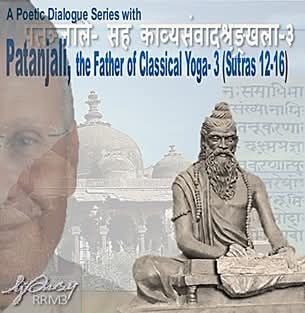
A Poetic Dialogue Series with PATANJALI THE FATHER OF CLASSICAL YOGA- 3 (Yoga Sutras (aphorisms) Chapter.1. Sutras 12 to 16: PRACTICE AND NON-ATTACHEMENT
***
The Poetic Dialogue Series with Patanjali – 3 is situated within an ancient yet enduring literary and philosophical tradition: that of dialogue as a tool for knowledge. The author revisits a form that, from Plato to medieval mysticism, has allowed teaching, meditation, and poetry to be combined, transforming doctrinal transmission into living experience. In this text, yogic doctrine is not expounded in a systematic or academic manner, but rather transfigured into a relationship. The poet's voice is not that of a simple disciple, but rather a conscious interlocutor, demonstrating a preliminary understanding of the Sutras and seeking clarification not out of ignorance, but rather for deeper understanding. This choice elevates the dialogue, removing it from elementary didacticism and placing it within a dimension of shared research.
Practice (Abhyasa) as Ontological Tension
The author correctly interprets practice not as a mechanical exercise, but as an orientation of being. The way the question is phrased suggests that the practice is already internalized as a process of "mastery over thoughts", that is, as a discipline of the mental field. What emerges is a dynamic conception: practice is not one technique among others, but a continuous act of existential choice. Critically, this approach is effective because it shifts the focus from spiritual performance to silent perseverance, bringing the text closer to an almost ascetic vision of the yogic path. Practice becomes the place where will, time, and consciousness intertwine.
Non-attachment (Vairagya) as liberation, not renunciation
One of the text's most valuable points is the recognition of non-attachment as freedom, not as a denial of the world. The author avoids a nihilistic or mortifying interpretation, suggesting instead that detachment coincides with the cessation of slavery to the objects of desire. This approach is consistent with a mature vision of Yoga: non-attachment does not destroy experience, it purifies it. Human beings continue to live, but without being possessed by what they experience. Critically, the text manages to make an often misunderstood concept comprehensible, translating it into a psychological, ethical, as well as spiritual, dimension.
The Function of "Supreme Non-Attachment"
The reference to the supreme level of non-attachment introduces a metaphysical dimension. Here, the dialogue suggests that even attachment to practices, results, and the very idea of liberation must be overcome. It is a subtle and bold transition, taking the text beyond consolatory spirituality and placing it in a territory of radical ego-emptiness. Critically, this moment represents the conceptual pinnacle of the piece, as it affirms that true freedom is not an accumulation of inner states, but emptiness. The style is simple, solemn, almost hieratic, with a clarity that prioritizes content over formal refinement. This choice appears conscious: the language is not intended to seduce, but to serve the meaning. The dialogue thus takes on an almost meditative function, inviting the reader not so much to interpret as to pause.
The Poetic Dialogue Series with Patanjali successfully combines doctrinal fidelity and poetic creativity, offering a contemporary rereading of the Sutras that neither trivializes nor museumizes them. The text proposes a vision of Yoga as a path of loving discipline and inner freedom, in which practice and non-attachment are not opposites, but two faces of the same transformation.
George Onsy's poems act as complementary meditations on consciousness, existence, and the dissolution of individuality in a unified cosmic resonance. His texts, particularly on Patanjali, belong to a long tradition of metaphysical and spiritual poetry, implicitly drawing on Vedic cosmology, mystical philosophy, and modern contemplative poetics. What emerges is a poetic exploration of sound as ontology, as that which reveals, contains, and ultimately transcends human experience.
In the Patanjali series, George Onsy focuses on the metaphysical aspect of human existence: an earthly metaphor with a direct invocation of the "Vedic voice," whose philosophical journey the poem traces. Through meditation, the human body becomes both a receiver and a distorting instrument, a temporary impediment through which the eternal sound must travel. Death, therefore, is not simply an end, but a liberation, allowing the cosmic vibration to resume its uninterrupted movement.
The poems in this cycle are characterized by a rare boldness: they attempt to describe the relationship between the human and the divine, using expressions that bridge the gap between the human and the divine. Symbolism plays a key role here, and the poet repeatedly compresses complex metaphysical ideas into modest, accessible images to expand them into cosmic meaning. This oscillation between the ordinary and the infinite is one of Onsy's distinctive strengths. The poems hint at transcendence without abandoning temporal immediacy.
A key philosophical implication in all his poems is the ultimate dissolution of the self: everything dissolves into cosmic resonance. This reflects the Advaita Vedanta principle of "non-duality," in which individual phenomena are reabsorbed into Brahman, the universal consciousness. The human condition is represented as a temporary suspension of cosmic continuity. The sacred sound "quiets" within the body. This reflects classical Indian metaphysics, in which the body is both sacred (as a vehicle of consciousness) and limited (as a barrier to full enlightenment). The poem dramatizes this tension through its sonic structure.
Onsy's engagement with Vedic cosmology is clear but not doctrinaire. His treatment of Patanjali's mystical cycle recalls the "Mandukya Upanishad", which describes the core concepts of his poetics as the totality of past, present, and future, as well as the silence beyond sound. Meanwhile, ancient philosophy and contemporary phenomenology interpenetrate.
Furthermore, the intertwining of words and music reflects a spiritual resonance that transcends any single master or tradition. The Cosmic Voice heard within the folds of the poem represents a diptych on the nature of sound, of the awareness of cosmic unity. Onsy manages to articulate the ineffable through a combination of sensorial rootedness, sonic experimentation, and metaphysical intuition. His poetry invites readers to reconsider the relationship between the human and the infinite, offering a vision in which all creation vibrates with a single voice. In an age dominated by noise, political, social, digital, Onsy's musically-charged poems remind us that beneath the turbulence lies an ancient stillness: a cosmic resonance to which all individual sounds, and all individual selves, ultimately return.
A Critical Comparative Study: Rumi, Walt Whitman, and Rabindranath Tagore
Undoubtedly, George Onsy's poetics are rooted in an ancient poetic tradition devoted to the relationship between the individual self and the infinite. Although he writes from a contemporary perspective, the philosophical and mystical concerns of his poetry resonate strongly with Rumi's spiritual cosmology, Walt Whitman's transcendental expansiveness, and Rabindranath Tagore's devotional universalism. This comparative study examines common motifs: cosmic unity, sound as a metaphysical principle, and the dissolution of individuality, while highlighting the distinct cultural and poetic strategies employed by each author. Sound as a path to infinity in Onsy represents the materiality of cosmic sound. Indeed, his poems focus on the idea that the universe is held together by a primordial vibration, expressed through elongated phonetic sequences, and that human noise is ultimately absorbed into this universal resonance.
For Rumi, music is seen as divine ecstasy. Similarly, Rumi conceives of sound as a portal to unity with the divine. In many of his ghazals and in the "Masnavi", the reed flute (nay) laments its separation from the reeds, symbolizing the soul's longing for the universal spirit. For Rumi, music leads to intoxication. spiritual and the death of the ego. Likewise, Onsy's cosmic vibration plays a similar role, yet its tone is more philosophical than ecstatic. Instead, for Whitman we witness the "Democratic Chorus of Being," that is, Whitman transforms sound into a celebration of multiplicity: the American "variegated Christmas carols" merge into a pluralistic hymn to existence. In short, Whitman emphasizes multiplicity or chorality, rather than the dissolution of voices, sharing Aanand's belief that all sounds ultimately belong to a larger, more harmonious whole.
In Tagore: Music has the sacredness of the everyday. More than "Song of Myself," in "Gitanjali," Tagore transforms everyday sounds, such as rain, wind, human voices, into spiritual music that expresses the constant presence of the divine. Like Onsy, Tagore suggests that cosmic sound permeates human life, but Tagore's tone is devotional, while Onsy's is metaphysical and cosmological-philosophical.
For George Onsy, the ego represents noise. In the cosmic voice, individual voices and conflicts fade into insignificance when perceived from the perspective of cosmic distance and universal vibration. Compared to Rumi's "Annihilation in the Beloved" (Fanaa), the dissolution of the ego is more passionate and revealing. For him, the self must burn in the fire of divine love until only the Beloved remains. Thus, George Onsy's dissolution in the divine is, like Rumi's, devotional and emotional.
In contrast, Whitman dissolves the boundaries of the self not through obliteration, but through expansion: "I am vast, I contain multitudes". His cosmic identity expands outward to encompass the entire world. Onsy, however, moves in the opposite direction: not the expansion of the self into the cosmos, but the absorption of the self by the cosmos. But Tagore's self-surrenders, but does not disappear; it becomes transparent to infinity.
For Onsy, the architecture of the universe is an ecstatic totality, a universe defined by universal love. His cosmology is fundamentally vibrational: all phenomena "sink" into a single soul, divinity in its all-encompassing essence. The concept of "Nada Brahma" or the universe as sound and light, is embodied in his harmony of lights, colors, and vibrations.
Meanwhile, Rumi's cosmos is kinetic and circular, embodied in the whirling ritual, as in the ritual of the Dervishes of Sufism (in Arabic "tasavvuf"), a general term used for esoteric Islam. The Mevlevi order, "mevlevilik" in Turkish, is one of the many Sufi "tarikat" founded in the 13th century by Celaleddin-i Rumi and spread widely throughout Syria and Anatolia. The term "tarikat" means brotherhood, and Sufi brotherhoods, just like those of friars and nuns within the Catholic religion, have a different founder and different rules, but are fully integrated into the Muslim religion, accepting all the theories of the Quran and the Prophet Muhammad. Its metaphysics is rhythmic, but not explicitly acoustic. Sound, movement, and divine presence merge into an ecstatic unity.
Rumi, therefore, invents a spiritually dancing universe, while in Whitman, the universe is a democratic body. Whitman perceives the cosmos through physicality. His metaphors of grass, bodies, and earth foreground material connection. While Onsy dissolves materiality into vibration, Whitman sanctifies physical substance itself. For Tagore, the Universe is Sacred Light and Music. Tagore integrates both light and sound, describing the divine as "the musician playing his infinite melody throughout the world". His imagery is more lyrical and devotional, like that of Onsy, surrogate for philosophy.
The styles of the four poets cited and compared are:
Poet | Primary Mode | Tone | Spiritual Orientation |
• Onsy: Sonic metaphysics; symbolic abstraction | Reflective, philosophical, creative | Vedic-cosmological |
• Rumi: Mystical love poetry | Ecstatic, passionate | Sufi |
• Whitman: Transcendentalism in free verse | Celebratory, democratic | Humanistic-pantheistic |
• Tagore: Devotional lyricism | Luminous, gentle | Bhakti-universalist!
Conclusion
The experimental use of symbolism in his drawings (for example, women fighting against evil, or famous figures from the past with whom he loves to converse) represents an extension of the concept of art that, in Onsy, transcends the distinction between painting, music, poetry, writing, and sculpture, in a unicum that is his expressive peculiarity given his background as a Professor of Architecture/Art History and Technology. A multifaceted creator, he is not content with poetry alone, but explores a continuous dialogue between different artistic expressions. While Rumi employs metaphors and spiritual desire; Whitman, catalog rhythmic and expansive free verse; Tagore, delicate simplicity and devotional purity; Onsy situates himself in a global mystical tradition.
In particular, in the Patanjali series, George Onsy offers contemporary contributions to a millennia-old poetic dialogue on the unity of the arts and sciences, music, and the nature of existence. Like Rumi, he seeks the dissolution of the ego, melting into divine mystique; like Whitman, he perceives a universal chorus beneath human diversity; like Tagore, he recognizes the sacred music inherent in the fabric of life. Yet, Onsy's voice is distinctly his own; where others often turn to images of light, love, or nature, Onsy addresses cosmic vibration, a metaphysics of music that posits the universe itself as a resonant instrument. His poetry reminds us that beneath the noise of human life lies a deeper harmony, the "cosmic voice" to which all beings ultimately return, a theme that unites mystical traditions from diverse cultures and that Onsy expresses with clarity, boldness, and a unique contemporary sensibility.
By Dr. Arch. Franca Colozzo (ITALY)
***
A Poetic Dialogue Series with PATANJALI THE FATHER OF CLASSICAL YOGA- 3 (Yoga Sutras (aphorisms) Chapter.1. Sutras 12 to 16: PRACTICE AND NON-ATTACHEMENT –
By Prof. Arch. George Onsy (Cairo, Egypt)
Our dialogue:
In this episode of our long conversation, I’m asking Revered Patanjali: I would like to discuss with you now the issue of PRACTICE AND NON-ATTACHEMENT. As for THE PRACTICE, I can understand that we should know HOW TO MASTER THOUGHTS, as you stated in your sutra 1.12, beginning with stating the MEANING OF PRACTICE in sutra 1.13, and how to MAKE PRACTICE FIRM in sutra 1.14. Then, I will get to your view on the NON-ATTACHMENT, sutra 1.15, proceeding to THE SUPREME NON-ATTACHMENT you added in sutra 1.16.
- Patanjali:
To attain MASTERY OVER THE MIND FIELD, as I stated in chapter 1. sutra 2, and, consequently, allowing THE REALIZATION OF THE TRUE SELF as presented in sutra 1.3, there are two central principles: Practice (abhyasa), mentioned in Chapter 1. Sutra 13) and non-attachment (vairagya, 1.15) as the two main principles on which the entire system of Yoga rests. It is through developing these two that the other practices evolve.
- I asked:
Can you tell me more, please?
- Patanjali:
अभ्यासवैराग्याभ्यां तन्निरोधः॥१२॥
abhyasa vairagyabhyam tat nirodhah||12||
These thought patterns (vrittis) are mastered (nirodhah, regulated, coordinated, controlled, stilled, quieted) through practice (abhyasa) and non-attachment (vairagya).
- I say:
To both principles I have no objection to agree
Yet, to apply them, there may be another key
- Patanjali:
तत्र स्थितौ यत्नोऽभ्यासः॥१३॥
tatra sthitau yatnah abhyasa||13||
Practice (abhyasa) means choosing, applying the effort, and doing those actions that bring a stable and tranquil state (sthitau).
- I go on:
To choose, apply, and do what tranquility brings
Can flow spontaneously when one lives as if he sings
- Patanjali:
स तु दीर्घकालनैरन्तर्यसत्कारासेवितो दृढभूमिः॥१४॥
sah tu dirgha kala nairantaira satkara asevitah dridha bhumih||14||
When that practice is done for a long time, without a break, and with sincere devotion, then the practice becomes a firmly rooted, stable and solid foundation.
- I wonder:
Can that practice of firmly rooted, and stable foundation
Simply be our daily-activity-based meditation?
- Patanjali, replying or not to my question, just continues his sutras to talk about his second principle; NON-ATTACHMENT:
दृष्टानुश्रविकविषयवितृष्णस्य वशीकारसञ्ज्ञा वैराग्यम्॥१५॥
drista anushravika vishaya vitrishnasya vashikara sanjna vairagyam||15||
When the mind loses desire even for objects seen or described in a tradition or in scriptures, it acquires a state of utter (vashikara) desirelessness that is called non-attachment (vairagya).
- So, I comment:
Loosing our earthly desire for anything whatsoever
Lies on what satisfies mind and soul now and forever
- Patanjali:
तत्परं पुरुषख्यातेर्गुणवैतृष्ण्यम्॥१६॥
tat param purusha khyateh guna vaitrshnyam||16||
Indifference to the subtlest elements, constituent principles, or qualities themselves (gunas), achieved through a knowledge of the nature of pure consciousness (purusha), is called supreme non-attachment (paravairagya).
- I say:
What the nature of pure consciousness can achieve
Can be attained when we dissolve into the Divine weave
Finally, to close this episode of our dialogue,
I recap what I've said to him:
To both principles I have no objection to agree
Yet, to apply them, there may be another key
To choose, apply, and do what tranquility brings
Can flow spontaneously when one lives as if he sings
Can that practice of firmly rooted, and stable foundation
Simply be our daily-activity-based meditation?
Losing our earthly desire for anything whatsoever
Lies on what satisfies mind and soul now and forever
What the nature of pure consciousness can achieve
Can be attained when we dissolve into the Divine weave.
Dear friends, before I will see you in our next episode.
* This is a production of our RRM3-Eternorama Academy's SPIRITUAL Channel: RRM3 UNIVERSAL HEALING SPIRITUALITY- MILLENNIUM III 24-HOUR YOGA, the Poetry of Living. Welcome to learn more on its RRM3 FB Platform: https://www.facebook.com/?ref=homescreenpwa
* Who Is Patanjali?
Patanjali is an Indian sage who lived between 2nd c. BC and 5th c. AD. He’s most famous for being the author of the Classical Yoga Sutras (aphorisms), often referred to as “The Yoga Sutras of Patanjali”. Besides these 196 Sutras, he had writings on Sanskrit language grammar, and medicine.
the best sources of Patanjali's Classical Yoga Sutras:
1-https://www.sanskrit-trikashaivism.com/.../learning.../461 with audio for the pronunciation.
2- https://swamij.com/yoga-sutras.htm
** About RRM3:
RRM3 … RINASCIMENTO-RENAISSANCE MILLENNIUM III is an international movement for peace and justice. With its peace campaigns published regularly through a network of 250 journals and magazines worldwide, RRM3 works diligently to help our suffering humanity. As part of the Transparency Register of the European Parliament and Commission, RRM3 calls for a needed European Awakening that can help the whole world. RRM3 has over 500 members that are continuously growing to include more international culture, media, research, and humanitarian work luminaries.
Welcome to join RRM3!
Before I see you in our next episode,
* This is a production of our RRM3-Eternorama Academy's SPIRITUAL Channel: RRM3 UNIVERSAL HEALING SPIRITUALITY- MILLENNIUM III 24-HOUR YOGA, the Poetry of Living. Welcome to learn more on its RRM3 FB Platform:
https://www.facebook.com/?ref=homescreenpwa
I testi, le immagini o i video pubblicati in questa pagina, laddove non facciano parte dei contenuti o del layout grafico gestiti direttamente da LaRecherche.it, sono da considerarsi pubblicati direttamente dall'autore Franca Colozzo, dunque senza un filtro diretto della Redazione, che comunque esercita un controllo, ma qualcosa puó sfuggire, pertanto, qualora si ravvisassero attribuzioni non corrette di Opere o violazioni del diritto d'autore si invita a contattare direttamente la Redazione a questa e-mail: redazione@larecherche.it, indicando chiaramente la questione e riportando il collegamento a questa medesima pagina. Si ringrazia per la collaborazione.